Choose a target deliberately, then observe one run
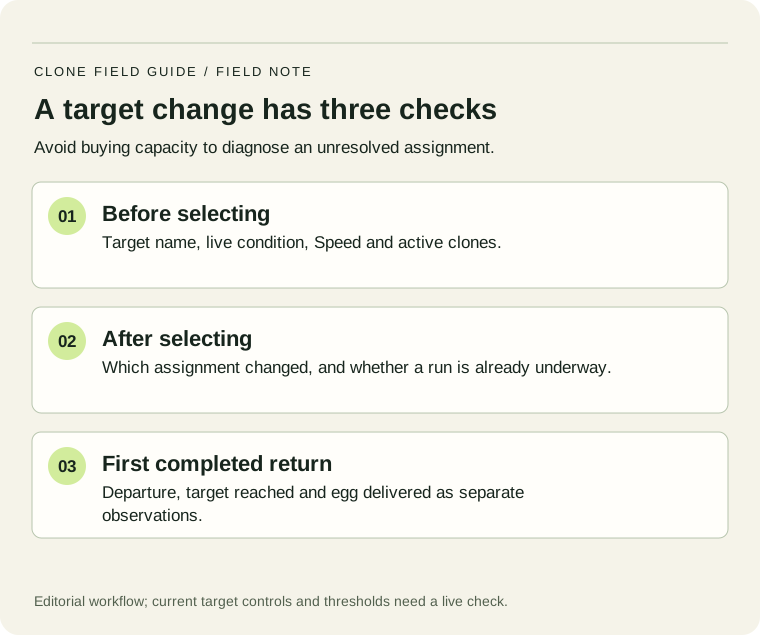
Copy the target name and live requirement before changing the assignment. Check which clone or group the current controls affect, then follow a complete attempt. The menu can show a selected target without proving that every active clone has changed its current run.
In the September LukeBlox transcript, a clone is described as heading toward Chicken near 0:14; later the creator discusses working toward Whale near 6:02. These dated narration references support checking target choice, not a current speed table or a rule that every clone changes target simultaneously.↗↗
Record assignment separately from upgrades
| What you see | What you can say |
|---|---|
| Target name changes in the panel | The displayed selection changed |
| A clone heads toward that target | That observed departure used the target |
| An egg returns | That observed attempt delivered an egg |
| No egg returns | More checking is needed before blaming a specific stat |
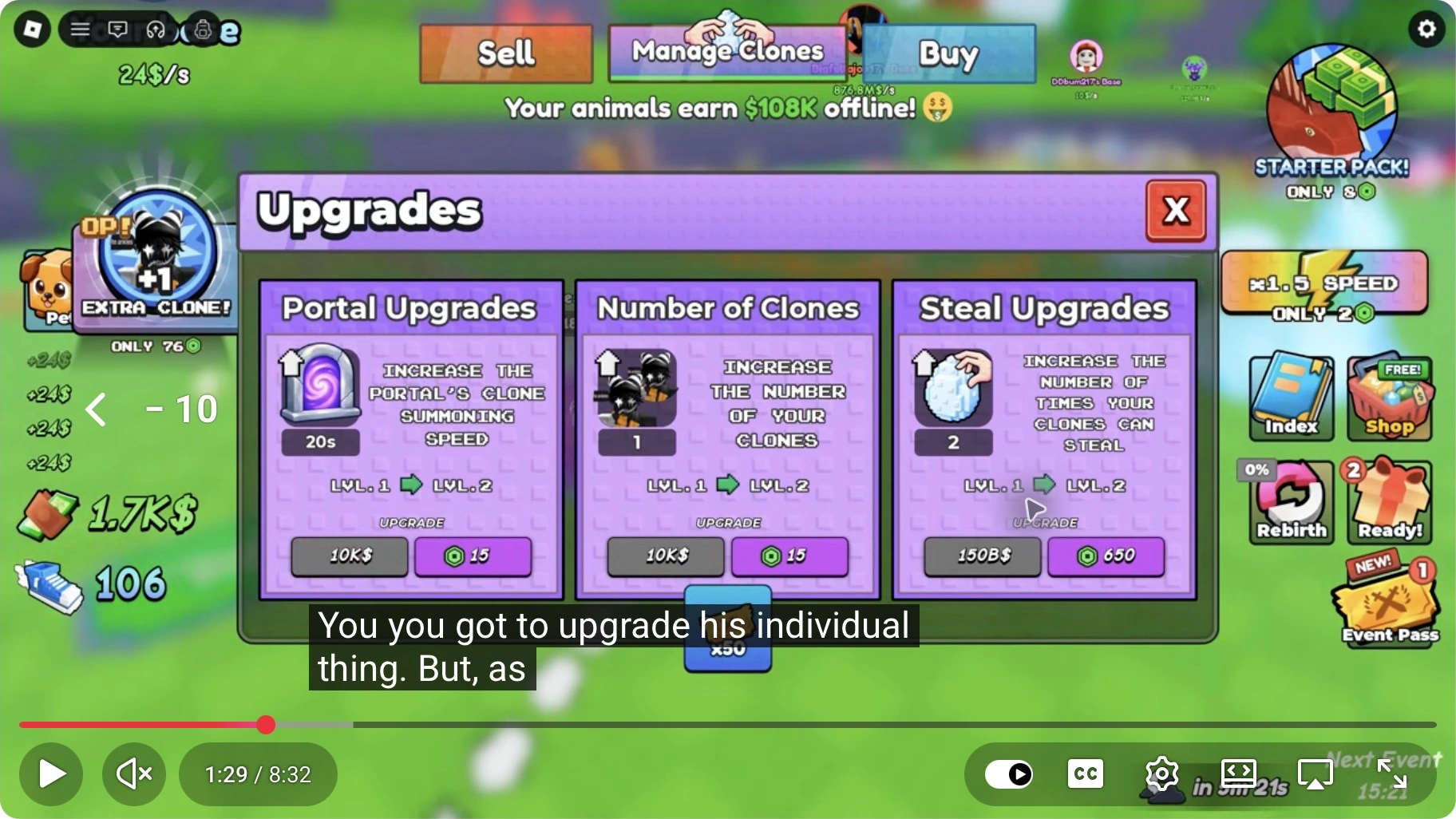
The screenshot identifies the historical upgrade cards. It is not a picture of today’s target selector and does not establish the retired earlier claim about a precise Chicken-to-Snake unlock counter. Read the target panel you actually have rather than borrowing an unrelated card’s numbers.
Official badge descriptions provide nine numbered animal milestones. They help identify names and order, but the public badge data does not document target speed requirements, map directions or whether a particular clone action awards a badge. Keep these facts separate when preparing a route.↗
Compare a target change with the reliable route
- Record a known returning target and its observed delivery rate.
- Read the next target’s current condition without guessing the required stat.
- Keep upgrades, temporary items and contributing pets unchanged if you want a useful comparison.
- Change the assignment using the live controls and note its scope.
- Inspect several comparable runs and count completed deliveries, not only attempted departures.
For example, an illustrative old route returns six eggs in three minutes while a new route returns three in three minutes. The delivery rates are two and one per minute. The new route could still serve a specific collection goal, but calling it automatically better for cash would require evidence about the egg outcomes and resulting contributions.
If the new route repeatedly fails, return to the live condition and assignment before buying more clones. An active-count improvement can multiply attempts at an unresolved problem. A training change may help close a visible requirement, but the reviewed material does not establish an exact universal formula connecting player speed and every clone’s movement.
Recheck after a server update or a changed panel. A saved target name and an old screenshot do not substitute for the current control state. If the interface differs from the recording, describe that difference in your record and leave unverified behavior unknown.
Follow the narration about a target
The creator describes a clone going to Chicken in this historical opening. It does not show today’s target-menu layout or a universal unlock rule.↗
Starting Over as NOOB with MOST EXPENSIVE TREADMILL in Clone to Steal Eggs! ↗
LukeBlox · 23 September 2026
Loading the player connects to YouTube. We use its privacy-enhanced player; YouTube may show its own ads. Privacy details.
What to look for
- 0:14An identified target
Follow the clone described in the opening rather than inferring every clone’s assignment from the upgrade cards.
Keep a useful record
Use the short worksheet for this decision. Fill only the fields you can read or measure; leave an uncertain result marked unknown. A second observation is useful only when you can compare the same setup. Keep the date with your readings so a later balance change does not silently turn an old result into a current rule.
Copy the checkpoint, not the creator’s entire route
When following a video, pause before the creator changes targets. Read your own Speed, the live target requirement and the clones assigned to it. Try a complete return cycle before sending the whole setup. A better-looking egg does not help if the selected clones repeatedly return empty.
Compare successful eggs returned per minute on the old and new target over the same observation length. Keep portal settings, clone count and boosts unchanged. If the new target produces fewer usable eggs, train further or return to the prior target; a late-game recording may have a different setup.
Change one target before changing every control
Take a baseline on the current target, switch the assignment and observe the same interval without also buying a treadmill or changing boosts. Count successful returns rather than departures. If returns fall, check the live access condition and the actual assignment before spending. A target shown in an older recording is a lead, not proof that your account can use it now.
Sources & scope
- Official Roblox experience description and identityChecked 15 October 2026
- Official Roblox badges — named animal milestonesChecked 15 October 2026
- LukeBlox — managing a clone and bringing eggs home · 0:14–0:4923 September 2026
- LukeBlox — later egg openings, target discussion, Auto Hatch and passes23 September 2026; original transcript captured and reviewed in October
- Superlex Plays — Portal, Number of Clones and Steal descriptions · 1:26–1:34Late September 2026 · inspected 2 October 2026
Written 15 October 2026. Official game and pass-directory data were checked today. Credited screenshots and video notes describe September recordings, not a current-server playtest. Worked examples are editorial calculations, not current game prices or tested drop odds. How we handle evidence.