Start with the number you actually need
Your wallet is cash available now. An income rate is cash earned over time. The planner needs both: saved cash determines what you can afford, while cash per minute estimates how quickly the balance can grow.

For a simple reading, subtract your starting balance from your ending balance and divide by the minutes observed. That works only when other cash movements have not distorted the change. A reward can make a weak setup look productive; a purchase can hide income that arrived during the same interval.
Take one clean reading before changing anything
- Record your starting cash and time, earning pets, target, base multiplier and any active boosts. Use the most precise balance available.
- Watch a fixed interval without purchases, sales or reward claims. If a hatch changes your earning setup or a boost expires, note when it happened.
- Record the ending cash and elapsed minutes. Divide the cash difference by the duration. Thirty seconds is 0.5 minutes; two minutes is 2.
- Repeat under the same conditions. A similar reading is more useful than a single unusually high interval. Keep both readings instead of selecting the larger one.
Keep the session open for this comparison. Record a disconnect or an absence separately; do not assume the same earnings continued while you were away. The planner does not model offline earnings.
For a purchase comparison, take a fresh interval after buying. Keep its duration and the other conditions comparable.
Use a ledger when cash moves for another reason
If you know every amount, you can separate ordinary earnings from known spending and one-off receipts. Count sales, gifts or claimed rewards as separate receipts when they are not part of the steady income you want to measure.
Earnings = ending cash − starting cash + spending − one-off receipts. Then divide earnings by elapsed minutes.
| Entry | Cash | Treatment |
|---|---|---|
| Starting wallet | 40K | Starting balance |
| One-off reward received | +10K | Subtract this receipt |
| Purchase made | −5K | Add this spending back |
| Ending wallet | 57K | Ending balance |
| Ordinary earnings | 12K | 57K − 40K + 5K − 10K |
| Average income | 6K/min | 12K ÷ 2 minutes |
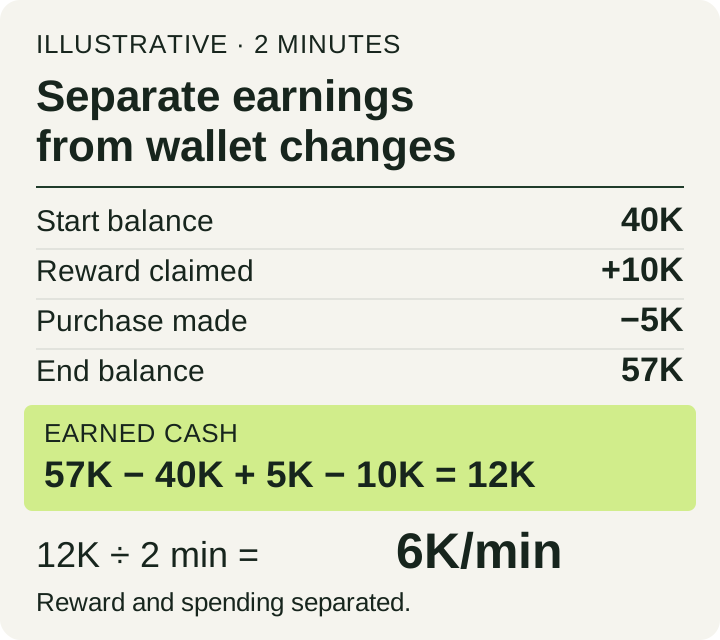
Using the raw wallet change would give 8.5K per minute. Correcting the ledger gives 6K, but it does not prove the purchase caused that rate. If it changed your pets or multiplier halfway through, the result mixes two setups. Start another clean interval to compare performance.
An unknown reward amount or missing transaction cannot be corrected reliably. Mark that interval incomplete and measure again.
Give rounded balances room to move
K, M and B abbreviations can hide small changes. Two readings that both show 4.2M do not establish zero earnings. A change from 4.2M to 4.3M also does not reveal the exact underlying difference. Those numbers illustrate the precision problem; they do not establish how this game rounds or truncates.
First look for a more precise reading. If none is available, use a longer unchanged interval so the movement spans several displayed steps. Keep the original displayed values in your notes and treat the resulting rate as approximate.
In LukeBlox’s recorded base purchase, the wallet displays 3B on both sides while a −5M transaction is visible. The transaction identifies spending that the abbreviated wallet comparison misses. It is not a timed earnings measurement.↗
Separate temporary rates into time windows
A session average describes the session that happened. If a temporary effect ends, that average may be a poor estimate of what happens next. Split the record at each known change instead of assuming the earlier rate continues.
| Window | Assumed rate | Cash earned |
|---|---|---|
| First 2 minutes | 6K/min | 12K |
| Next 1 minute | 3K/min | 3K |
| Whole 3-minute observation | 5K/min average | 15K total |
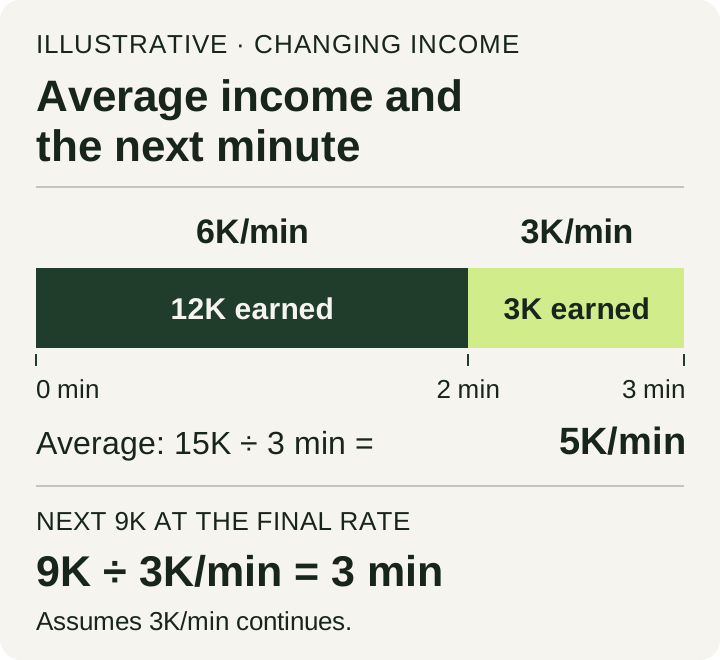
Here, projecting another 9K at the average would suggest 1.8 minutes. At the final rate it takes three. Use a rate matching the period you are planning, and label an unmeasured future rate as an estimate.
Identify what changed before crediting an upgrade
In LukeBlox’s September recording, an Exclusive Pack purchase at 2:05 is followed by equipping a Seahorse at 2:15. He then makes several clone-upgrade changes. Those pet and upgrade changes sit between the early and later cash readings; the later wallet cannot isolate the return from one purchase.↗
| What you notice | Next check |
|---|---|
| Cash jumps once | Check the reward and sale ledger before calling it steady income. |
| The wallet barely changes | Check display precision and interval length. |
| The corrected income becomes negative | Check missing spending, duplicated or overstated receipts, and the balance readings. Rounded values can also distort a small result. |
| Income falls during the interval | Check boost expiry, changed pets and interruptions. |
| An upgrade looks unusually profitable | Compare the pet setup and other changes on both sides. |
Use the clean rate in the planner, then compare an upgrade with keeping your savings. A rebirth purchase needs the same separation between cash spent and income arriving; record its actual terms before estimating the benefit.
Use a reading you can explain
Record the interval, cash movements and any setup change. Keep the clean baseline separate from a temporary or mixed rate before comparing a purchase.
Download the cash worksheet ↓Sources & scope
- LukeBlox — clone upgrades and equipment · 1:41–2:3123 September 2026
- LukeBlox — one 5M base upgrade and pet income labels · 3:0023 September 2026 · frames inspected 3 October 2026
- Superlex Plays — first clone, ready egg and earning pet · 0:00–1:01Late September 2026 · inspected 2 October 2026
The income-label still comes from Superlex Plays’ recorded opening; the paid-pet sequence and rounded base-purchase readings come from LukeBlox. These are dated recordings, not a new gameplay test. Ledger and rate-window examples are illustrative. Cash-flow adjustments do not isolate the causal effect of one purchase. No offline earning rule or current boost duration is asserted. How we handle evidence.