What does the recorded Silver purchase show?
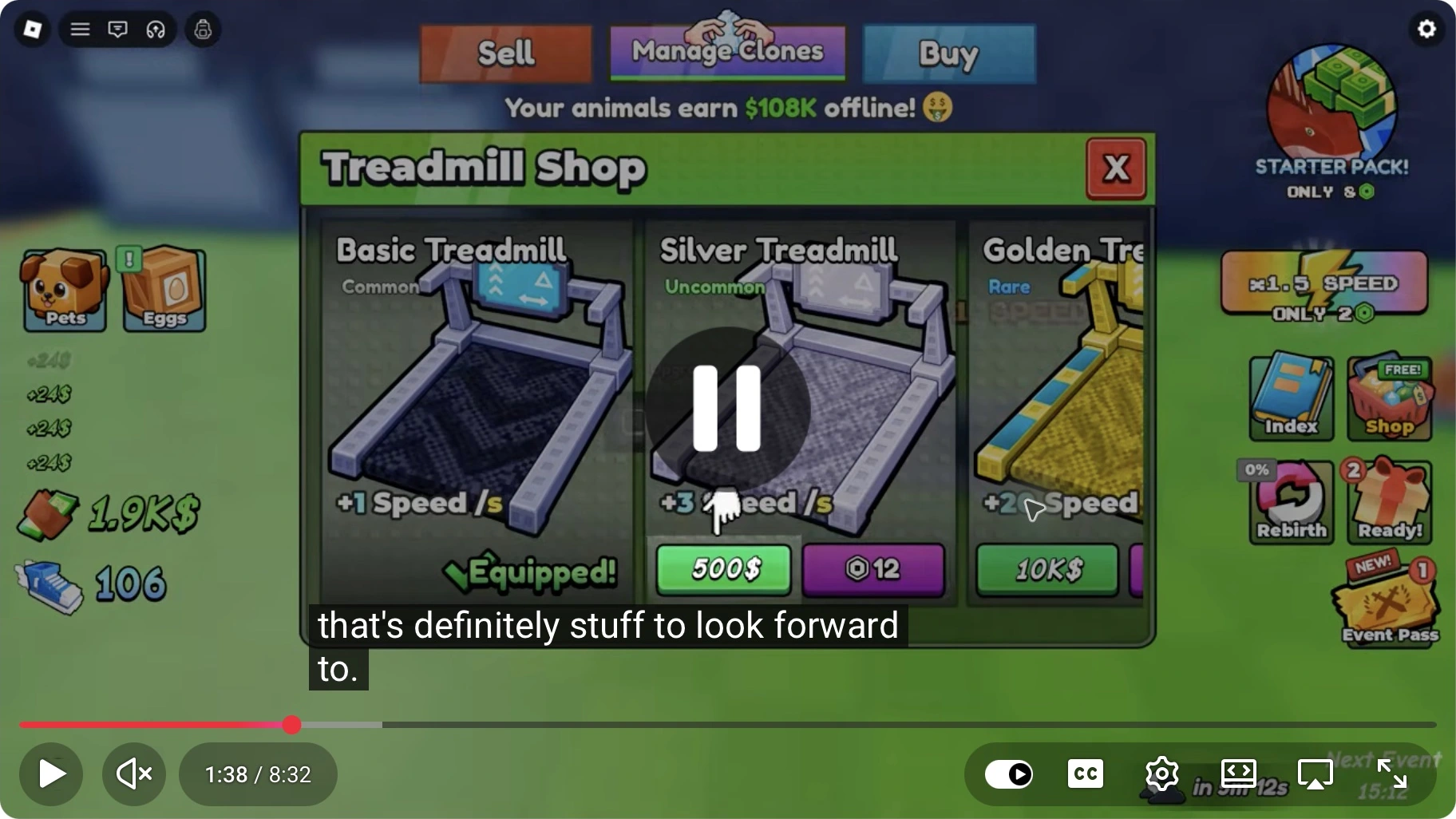
In the reviewed Superlex Plays sequence, Basic is equipped at +1 Speed/s, while Silver offers +3 Speed/s for 500 game cash. A separate 12 Robux option is visible. The following frame shows Silver equipped and a −500 cash transaction. Those are recorded September values, not a current price guarantee.↗
For a player with the cash already available, tripling the displayed training rate can shorten the remaining training interval. For a player who must save first, the useful question is different: will the purchase happen early enough to help the next target? Training during the saving period matters.
A worked comparison for 300 more speed
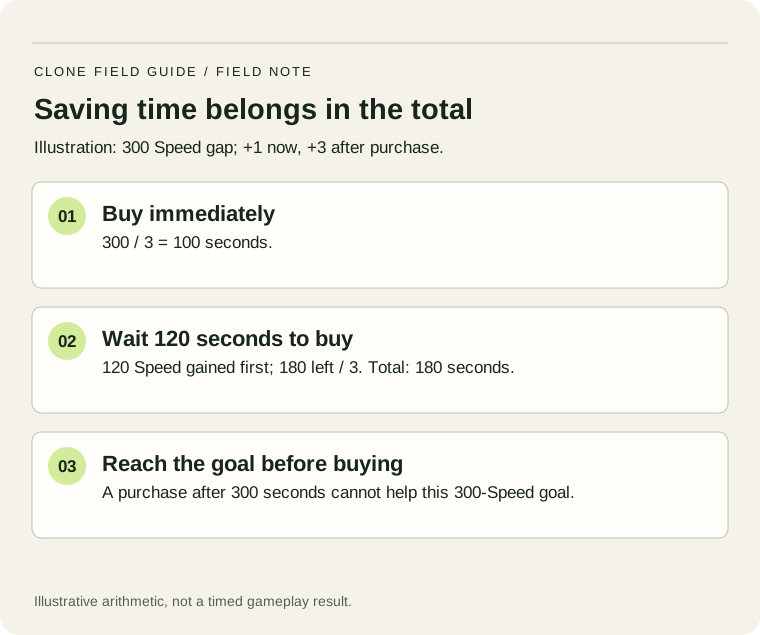
At an unchanged +1 Speed/s, 300 additional speed takes 300 seconds. At an unchanged +3 Speed/s, it takes 100 seconds. The 200-second difference assumes the improved rate is available immediately. It does not recover the 500 cash, establish a cash-income gain, or include the wait to buy.
| Case | Calculation | Time from now |
|---|---|---|
| Keep Basic | 300 ÷ 1 | 300 seconds |
| Silver available immediately | 300 ÷ 3 | 100 seconds |
| Save 120 seconds, training continues | 120 + (300 − 120) ÷ 3 | 180 seconds |
| Save 240 seconds, training continues | 240 + (300 − 240) ÷ 3 | 260 seconds |
Use your own price and saving time
- Read today’s cash price, equipped machine and offered training gain.
- Subtract your current wallet from the price to find the cash still needed.
- Estimate the saving wait from a clean cash-per-minute reading.
- Allow for the speed you can gain during that wait, if training continues.
- Compare the total with simply training toward the same target now.
For example, if the cash gap is 360 and steady income is 180 per minute, the saving wait is two minutes. That does not mean the machine always becomes affordable in two minutes: rewards, purchases and changing pet income can alter the wallet. Check the balance again before acting, and keep temporary boosts out of a long-term rate.
Once you can afford the purchase, verify that the intended machine becomes equipped. Owning a machine and training on it are separate observations. Check a new interval after the change rather than attributing every later speed gain to the label you saw in the shop.
There is no universal best treadmill in this comparison. A better shop tier can help a later target while making little difference to one you are seconds away from reaching. If cash is needed for a different bottleneck, compare that decision as well. Keep paid alternatives separate so a cash plan does not silently become a Robux purchase.
See the purchase in the source video
Pause before and after the transaction. Use the displayed price and equipped state as historical evidence.↗
ROBLOX CLONE TO STEAL EGGS.. ↗
Superlex Plays · Late September 2026
Loading the player connects to YouTube. We use its privacy-enhanced player; YouTube may show its own ads. Privacy details.
What to look for
- 1:38Before buying
Basic is equipped. Silver has its own cash and Robux buttons.
- 1:39After buying
Silver is equipped and the cash transaction is visible. The rounded wallet alone is not exact evidence of the deduction.
Keep a useful record
Use the short worksheet for this decision. Fill only the fields you can read or measure; leave an uncertain result marked unknown. A second observation is useful only when you can compare the same setup. Keep the date with your readings so a later balance change does not silently turn an old result into a current rule.
Find the break-even speed gap before buying
Added 20 October 2026. The procedure below is our editorial planning method; any numerical example is hypothetical.
| Hypothetical setup | Result | How to use it |
|---|---|---|
| Keep Basic at 1 Speed/s | A 300-Speed gap takes 300 seconds | Baseline with no purchase. |
| Save for 120 seconds, then train at 3 Speed/s | 120 + 300 ÷ 3 = 220 seconds | Includes the saving delay; assumes no training during that delay. |
| Break-even gap | 120 ÷ (1 − 1/3) = 180 Speed | Above this gap, the hypothetical purchase route is faster. |
| Only a 60-Speed gap remains | Keep: 60s; buy route: 140s | A faster treadmill can still be slower for a nearby goal. |
Replace both training rates and the wait with your own readings. If training continues while saving, subtract the Speed gained during that wait before calculating the second leg. Historical Basic/Silver labels are context; this example does not establish today’s prices.
Sources & scope
- Superlex Plays — buying Silver with game cash · 1:38–1:39Late September 2026 · inspected 2 October 2026
- Official Roblox experience — identity and descriptionChecked 14 October 2026
Written 14 October 2026. Official identity and description were rechecked today. Gameplay stills and timestamp notes refer to the credited September recordings; they are not a new playtest. Worked numbers marked illustrative are planning examples, not current game prices. How we handle evidence.