A bigger multiplier is not the same percentage gain
In the reviewed LukeBlox sequence, one base purchase costs 5M, changes the counter from 0/10 to 1/10 and changes CASH MULTI from ×8.00 to ×8.05. The increase in that displayed multiplier is 0.05, equivalent to 0.625% relative to ×8.00. It is not a 5% increase.↗
The visible next price is 25M. Keep that next offer separate from the 5M transaction just completed. This distinction matters when a screenshot is taken after buying: the large price still on the sign may describe the next level rather than what you paid.
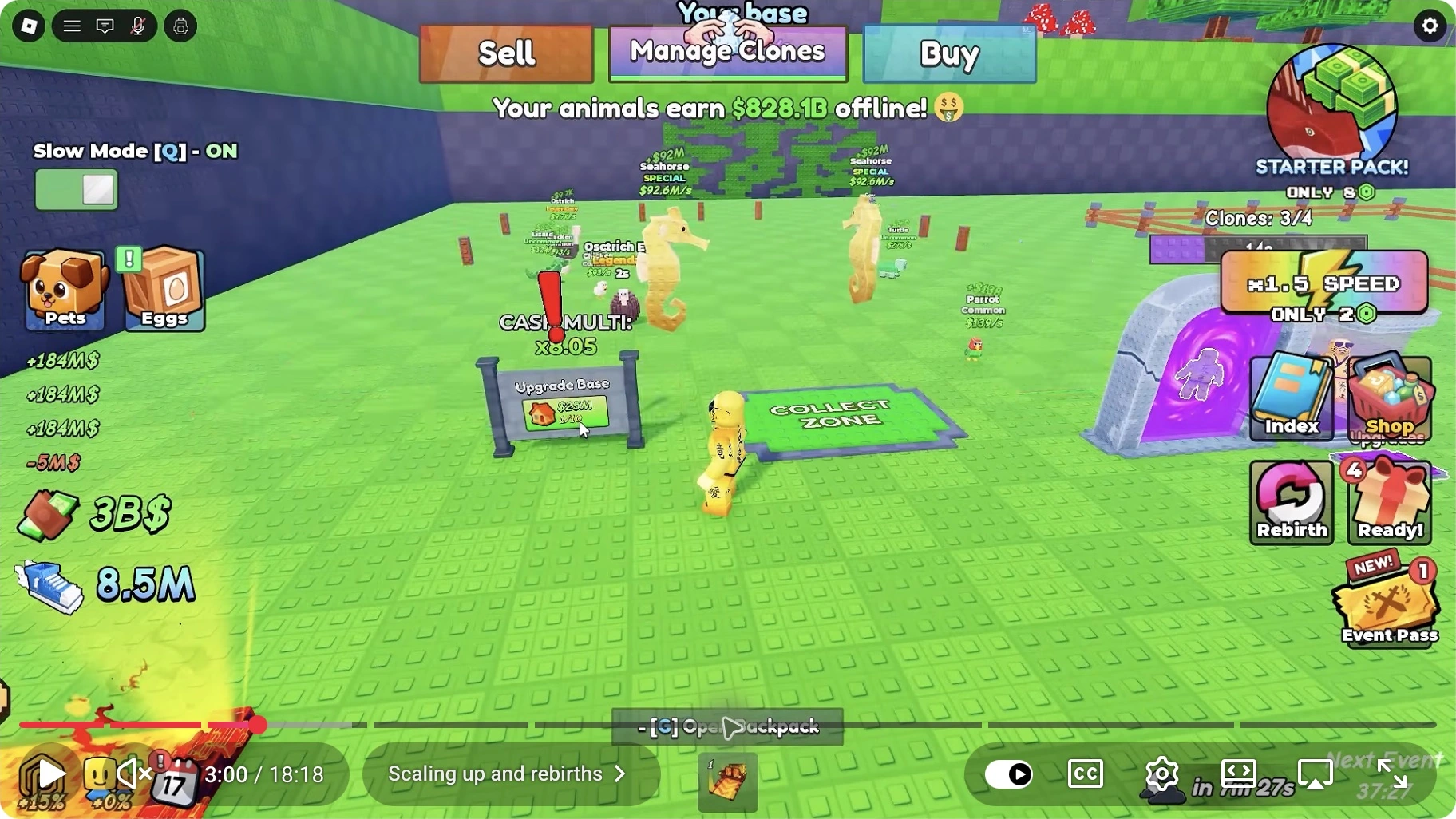
Read one before-and-after purchase
| Reading | Before | After |
|---|---|---|
| Upgrade counter | 0/10 | 1/10 |
| Cash multiplier | ×8.00 | ×8.05 |
| Two Seahorse labels, each | 92M/s | 92.6M/s |
| Parrot label | 138/s | 139/s |
These pet labels are rounded display values, so their percentage changes need not match the multiplier calculation exactly. The frames do not provide a timed cash-accrual test. They also do not establish that this purchase adds pet capacity or that every subsequent level follows the same price curve.↗
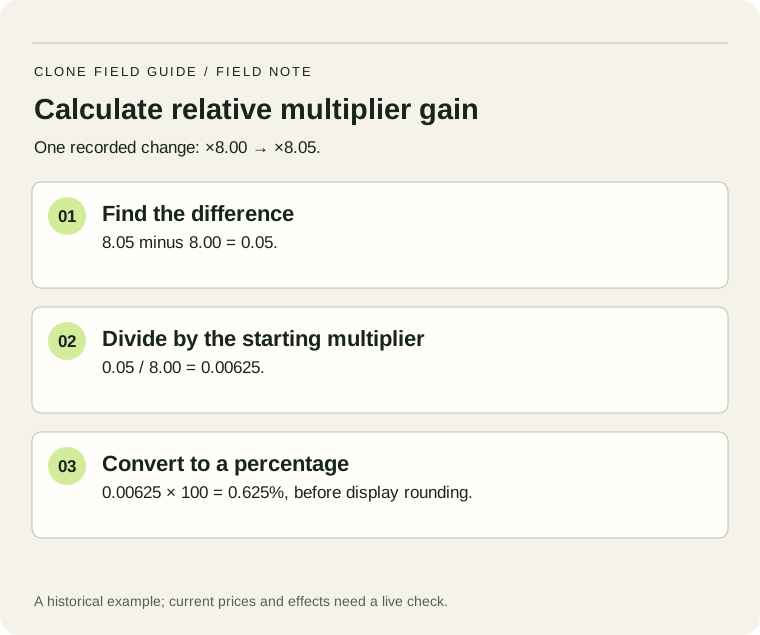
Compare the cost with useful extra income
For an illustrative stable income of 100,000 per minute, a 0.625% gain would add 625 per minute if the change applies proportionally to all of that income. At an illustrative cost of 50,000, simple cash payback would be 50,000 ÷ 625 = 80 minutes. That calculation is conditional; it does not claim a current game price or include later purchases.
- Copy the current level, current multiplier, promised effect and cash price.
- Record the contributing pets and any boost timer.
- If you buy, confirm the transaction and resulting level.
- Compare the multiplier ratio and a clean cash interval.
- Record the next offer separately for a later decision.
A multiplier purchase can become more useful as ordinary pet income grows, but its benefit still needs a baseline. If you replace pets during the same interval, the increased rate can no longer be attributed to the base purchase alone. If a temporary potion ends, the observed rate may even fall despite a permanent improvement. Keep these events in the ledger.
Before using a base upgrade to solve a space problem, read the effect the current panel actually promises. The retained evidence confirms a cash-multiplier change in one transaction; it does not confirm added pet slots. A more impressive fence or an advancing level counter is not enough to establish capacity.
Compare with rebirth using each panel’s current cost and stated result. Do not assume their multipliers use the same scale or that the cash price consumes the entire wallet. For planning, write the immediate cost and the next income estimate as separate inputs, then check whether buying now delays your main cash goal.
Watch the base sign and pet labels
This moment concerns the base upgrade, before the later rebirth sequence. Follow the sign and nearby pet labels.
Starting Over as NOOB with MOST EXPENSIVE TREADMILL in Clone to Steal Eggs! ↗
LukeBlox · 23 September 2026
Loading the player connects to YouTube. We use its privacy-enhanced player; YouTube may show its own ads. Privacy details.
What to look for
- 3:00The 5M purchase
Read the change from 0/10 to 1/10 and ×8.00 to ×8.05; 25M is the next offer.
Keep a useful record
Use the short worksheet for this decision. Fill only the fields you can read or measure; leave an uncertain result marked unknown. A second observation is useful only when you can compare the same setup. Keep the date with your readings so a later balance change does not silently turn an old result into a current rule.
Calculate the relative bonus, then the recovery time
Added 20 October 2026. The procedure below is our editorial planning method; any numerical example is hypothetical.
| Hypothetical comparison | Calculation | Decision value |
|---|---|---|
| Multiplier 2.00 → 2.10 | 2.10 ÷ 2.00 − 1 = 5% | The relative gain is 5%, not ten percentage points of total income. |
| Comparable baseline: 10,000 Cash/min | 10,000 × 0.05 = 500 extra Cash/min | Only valid if that income scales with the multiplier. |
| Example price: 25,000 Cash | 25,000 ÷ 500 = 50 minutes | Simple recovery time, before considering the next unlock. |
| A changing pet or potion setup | Measure a fresh comparable baseline | Do not credit unrelated income changes to the base purchase. |
Compare the recovery time with how long you expect to keep this setup and with your next cash goal. Use the purchased level’s price, not the next price that appears after the transaction. These figures are editorial examples, not new game prices.
Sources & scope
- LukeBlox — one 5M base upgrade and pet income labels · 3:0023 September 2026 · frames inspected 3 October 2026
- Official Roblox experience — identity and descriptionChecked 14 October 2026
Written 14 October 2026. Official identity and description were rechecked today. Gameplay stills and timestamp notes refer to the credited September recordings; they are not a new playtest. Worked numbers marked illustrative are planning examples, not current game prices. How we handle evidence.